Exploring Spain - The cork industry in Spain |
|
Cork has been produced commercially for centuries and Spain has always played an important part. Although Portugal used to produce around 50% of the cork in the world and Spain produced over 30%, a large fire in Portugal in 2003, destroyed much of the forests so now, Spain is the highest producer. |
|
Common uses of cork include wine stoppers, which accounts for 60% of cork produced. Cork flooring is also a major industry. |
|
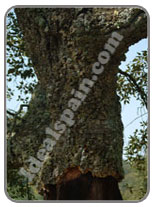
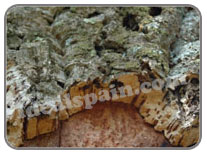
Cork is the natural bark of the cork oak tree which is native to the Mediterranean. The bark is stripped from the tree in large segments then sent for processing. In Andalucia, cork is only allowed to be removed from the trees between June 15th and August 15th in order to protect the trees. The men that remove the cork have to undergo a two year training course before being allowed to work on the trees. See our video of cork trees in Spain here.
|
|
|
Cork for wine stoppers
Wine cork stoppers can be made from a single piece of cork or from granules of cork that have been bound together (technical cork). This is particularly popular with champagne corks. Solid cork stoppers account for around 60% of corks produced. Cork is a perfect material for use as a bottle stopper because of the cellular structure of cork, it is easily compressed upon insertion into a bottle and will then expand to form a tight seal. However, unavoidable natural flaws, channels, and cracks in the bark make the cork itself highly inconsistent. Since the 1990's some wine producers have switched to synthetic wine stoppers. This is mainly due to the costs involved in production. Natural cork stoppers have been proved to be better for wine due to the natural properties. |

See a short video of
Cork oaks in Spain |
| |
| The production process starts when the seasoned cork sheets are stacked flat and boiled for at least 60 minutes. The boiling allows the cells within the cork to fully expand into a tight honeycomb. The cork expands by around 20%. The planks then take around three weeks to dry out. |
| |
Uses of cork
Wine stoppers
Cork flooring
Shoes for extended comfort
Woodwind instruments
Insulating items such as coasters
|
| |
|
|
|
|
|
|
|
| |
|
 |
Bargain priced Insurance for your holiday home in Spain or for your Spanish home. Policies in English and English speaking helplines. The prices are the lowest you will find anywhere |
|
|