|
The
Romans
saw
the
importance
of the
location
of
Tarragona
in the
3rd
century
B.C
when
they
set up
military
and
political
headquarters
there.
The
strategic
location,
mild
climate
and
the
local
wine
were
an
ideal
combination.
Known
as
Tarraco,
it
became
the
capital
of the
Roman's
biggest
Spanish
province.
It
grew
to a
population
of
around
30,000
and
had
its
own
money
mint.
So
much
was
built
here
by the
Romans
and so
much
remains
here
its
like
stepping
back
in
time.
Tarragona
is
98km
from
Barcelona,
within
Catalonia.
|
|
|
|
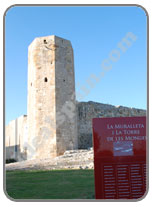
All
over
Tarragona
you
will
see
remnants
of the
Roman
Empire,
from
simple
columns
to a
full
size
amphitheatre
along
the
beach
edge.
During
excavations
here
in
1953,
an
early
Christian
church
was
discovered.
Above
this
site
is
what's
called
the
Balco
de
Maditerrani,
a
cliff-side
promenade
that
offers
unbeatable
views
over
the
sea. |
|
|
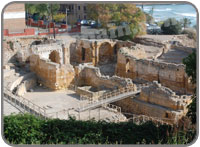
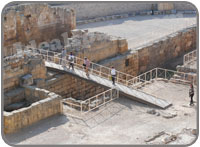
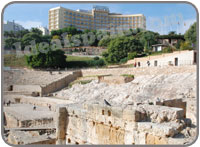
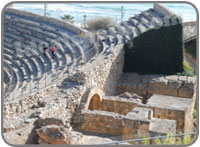
These photographs show the amphitheatre in Tarragona. Entry is 3 euros per person. |
|
| In the summer, Roman re-enactments are held in the arena. |
|
| |
|
|
|
|
Close
to the
central
market
lie
the
excavated
remains
of the
Roman
Forum
where
you
can
wander
and
wonder
on
what
the
shops
and
amenities
looked
like
in
Roman
times.
On the
edge
of the
city,
over-looking
the
River
Francoli
is an
extraordinary
museum,
quite
unique.
The
Necropoli
i
Museu
Paleocristia
is a
cemetery
for
Tarragona's
early
Christians.
The
museum
which
is
about
the
size
of
three
football
pitches
has
observation
platforms
looking
over
hundreds
of
graves,
left
as
they
were
discovered.
|
|
|
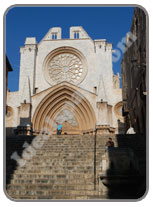
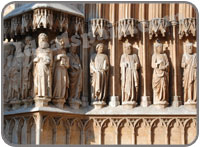
The
Cathedral
in Tarragona is a
'must-see'.
Built
in
1171
on the
site
of a
Roman
temple
to
Jupiter,
it has
19
chapels
in
all.
Inside
you
will
also
find
the
museum
with a
wealth
of
important
artefacts.
The cathedral area is the oldest part of the city and it is here where you find small craft shops, bars and cafes. |
|
|
|
|
|
|
There is a weekly antiques market held around the cathedral, (more like a car boot sale without the cars). |
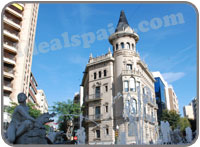
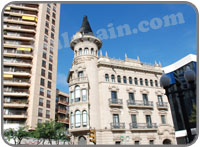
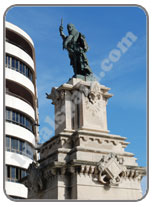
Tarragona, although an ancient city, is now a cosmopolitan hub where ancient and modern rubs shoulders quite happily. Modern buildings blend perfectly with statues, quaint plazas and modern high street shops.
The walk through the city centre is pleasant, especially in the evening. |
|
|
|
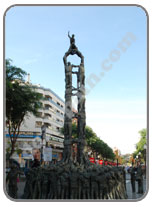
Pictured left is a unique bronze statue of the 'human towers' an unusual fiesta in the area. It's located on the main Rambla. |
|
|
|
|
|
| Low cost car hire in Tarragona - Instant quotes, online booking and guaranteed reservations. Access to all the top car hire companies in Spain |
|
| |
|
|