Guide to Madrid in spain, Madrid travel and tourist information, hotels and holidays in Madrid, city guide madrid, visit madrid
Idealspain.com
iDEALSPAIN HOME PAGE About us Contact us Forum Plan your move to Spain Advertise with us
Property in Spain
Spacer

Buying residential property in Spain

Spacer

Buying commercials in Spain

Spacer

New developments in Spain

Spacer

Golf properties in Spain

Spacer

Rural properties in Spain

Spacer

Private properties for sale in Spain

Spacer

Properties to rent in Spain

Spacer

Buy or run a business in Spain

Spacer

Advertise in properties

Moving to Spain
Spacer
In depth guide to moving to Spain
Spacer
A-Z of places in Spain
Spacer
Relocation services
Spacer
The Spanish legal system
Spacer
Taking pets to Spain
Money matters
Spacer
Basic facts about money in Spain
Spacer
Banks and banking in Spain
Spacer
Mortgages in Spain
Spacer
Investments in Spain
Spacer
Currency exchanges
Spacer
Pensions and retirement in Spain
Living in Spain
Spacer
The healthcare system in Spain
Spacer
Schools and education in Spain
Spacer
Driving in Spain
Spacer
The culture in Spain
Spacer
Live weather in Spain
Spacer
Advice for the elderly in Spain
Working in Spain
Spacer
Buy a bar or restaurant in Spain
Spacer
Working laws in Spain
Spacer
How to run a business in Spain
Holidays in Spain
Spacer
Holidays in Spain start here
Spacer
Airports and flight information
Spacer
Find a cheap hotel in Spain
Spacer
Find a cheap hostel in Spain
Spacer
Hire a car in Spain
Spacer
Golf in Spain
Spacer
Fishing in Spain
Spacer
Tourist offices in Spain
Spacer
Public transport in Spain


Bargain priced Insurance for
homes in Spain

 
Places in Spain - Madrid, guide to the city of Madrid


Madrid has a unique atmosphere due to the combination of its high altitude and the mountain breeze. At an altitude of 2,100 feet, this could be Europe's highest capital. Not only is Madrid the capital of Spain but it is also the world capital of bullfighting. Madrid is alive with bars and cafes and has some of the finest shops in Europe.

Located virtually in the centre of the country, Madrid is in close proximity to Segovia in the north and Toledo in the south, two other very important cities. Also close by is Avila an historic centre. Madrid has always been at the forefront of Spain's history; King Philip II promoted Madrid from a provincial town to his national command post in the middle of the 16th century. Since then Madrid hasn't stopped growing. Nowadays many of Spain's leading companies have head offices here as well as many major factories. Being such an economic centre, Spaniards have converged upon Madrid from every corner of the country.


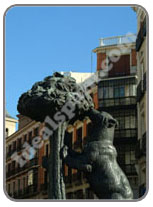
The Puerta del Sol is the centre of Madrid and is the point from which all Spain's radial highways begin; 'kilometre 0'. In the central area of the Puerta del Sol you will find a statue based on Madrid's coat of arms. It shows a bear standing against a tree. You will find the very same bear all over Madrid. (see Picture below)


Related pages
Related articles


When you arrive to explore the centre of Madrid you will be subjected to a culture overload. You will however, find it difficult to get lost; all over the city you will find well placed city maps and helpful tourist offices. You will find every mode of transport possible including an underground Metro and all are easy to use and efficient. You will find driving in Madrid to be an absolute nightmare and rush hours run into each other. There are very few quiet periods where traffic jams are not the norm. You will have no trouble finding a taxi; there are thousands of them. There is also a first class bus service.
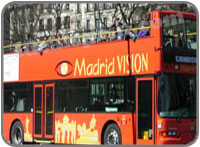
A great way to see the city is by open-top tour bus. The Madrid Vision service is first class and cheap; a day ticket will cost you around 9.62€, a 2 day ticket 12.02€ (2006). Supplements apply for weekends and holidays. Children under 7 travel free. You can hop on and off the bus as many times as you like and there are three routes to cover. The easiest place to start is the Prado Museum or Puerta del Sol.
Customer help can be obtained on Tel 917651016 or fax 917791887.

Madrid also has an efficient and cheap Metro service.

Madrid has so much to offer, you will need a week to see it all. Here are the places you must see;

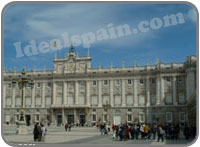
The Palacio Real, or Royal Palace (pictured right) is probably one of the most important places in Madrid and it is open to the public, except when official business is taking place. It is set in formal gardens on the site of a Moorish fortress that burned down in 1734. Tickets to view inside the palace as around 7€. There is a small supplement if you want to be guided round. There are many rooms to be seen including the throne room and the Royal Farmacia. Across the courtyard you will find the Royal Armoury with an impressive display of armour; this is included in the tour price. There is also a large gift shop.


Outside the palace are wonderful gardens with many statues of past royals. Close by is the Cathedral of the Almudena, currently being restored.


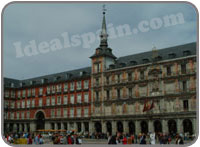
The Plaza Mayor (pictured left), is a huge square constructed in 1617. It has been pedestrianised and can be entered by any one of nine arches. The famous square has played host to bullfights, fiestas and even public executions. From time to time, events such as concerts and fiestas are still staged here. The square contains 136 houses with 437 balconies from which people used to watch the events held here. The square has always been a popular meeting place, especially on Sundays when the many bars and restaurants complement the weekly stamp and coin fair.
In the centre of the square stands the statue of Philip III on horseback. The statue dates from 1616 and was placed in the square in 1847 after the wedding celebrations of Isabel II, during which the last bull run was held in the square.

It has been said that the people of Madrid (Madrilenos), never sleep. This is partly true. They have the least amount of sleep of all Europeans. They live to extremes. This may have something to do with the weather. its either too hot or too cold. The city is constantly vibrant and has a pulsating nightlife.

Whatever you do, enjoy Madrid. There are enough museums alone to keep you fully occupied for a week. If you want to see as much of Madrid as possible, you will have to divide it into sections and take them one by one. The best place to start is in the heart of the city and especially in the old Madrid.

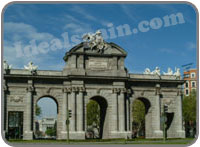
Pictured right is the Puerta de Alcala. It can be seen in the centre of the Plaza de la Independencia on Calle de Alcala. This street is without doubt, the most important in Madrid. It is also the longest. There are many important buildings located in this street. See the Church of the Calatravas and the Church of San Jose. You will also find the Fine Arts Museum and the Casino on this street.


At the other end of the street is the Puerta del Sol.

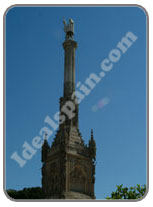
In the Plaza Colon (pictured left) you will find several monuments to Columbus and his travels. The Gardens of Discovery in the centre of the square are towered over by huge blocks of stone on which details of the travels of Columbus and his men are inscribed. The tall monument of Columbus is in Neo-Gothic style and dates from 1885. Beneath the square is the Cultural Centre. This building houses a theatre, concert hall and exhibition rooms. The centre is masked by a wall of water.


Close by is the Wax Museum (Museo de Cera) which has over 450 sculptures and a 'horror train' ride, the Palace of Justice and the Archaeological Museum with its impressive dinosaur collection.

There are many parks and gardens to explore including the Botanical Gardens with their exotic plants. These can be found alongside the Prado Museum. 


You must also see the massive Parque del Buen Retiro. The park has a central lake, numerous fountains and statues and pleasant walkways. The park comes alive at weekends and is the place to be seen. It consists of 12 hectares and originally formed part of the Palace of Buen Retiro, constructed in the 17th century by Philip IV. There are two palaces in the park at which many exhibitions are held.

Hire a boat on the lake or just sit and enjoy the many street entertainers that converge here.


There are more than enough museums including the famous Prado Museum. This is without any doubt the pride of Madrid and is one of the most important museums in the world.


It houses the world's greatest collection of Spanish paintings. If you were to allow a full day visit you would struggle to see all of its treasures but at the very least you should allow a couple of hours to see the best old masters in the world. Goya, El Greco and Picasso are just a few of those artists represented. Entry is cheap at just 3€ and free on Sundays. Closed Mondays.


Close to the Prado Museum is the fountain of Neptune which stands in the middle of the roundabout. Another important fountain is that of Cibeles, the Greek Goddess of fertility which stands in front of the Bank of Spain in the Plaza de la Cibeles.
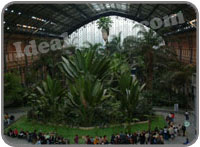
There are two railway stations in Madrid. The main one being Estacion de Atocha (pictured right). This station is of huge proportions and includes a tropical garden in the main hall. The station is well organised and easy to use. Here you can catch all the national high speed trains. There are ample shops and cafes at your disposal.


The station stands on the site of the old city gates and was opened in 1851. It was destroyed by fire in 1892 and reconstructed in iron and glass. It was refurbished in 1992 to cope with the new AVE high speed lines.

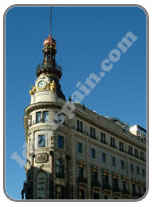
The Gran Via is one of the most animated and commercial streets in the city. Along its length you can see very different styles of architecture and some very well preserved buildings. The Telefonica building was the first ever sky-scraper of Madrid, completed in 1929. There are also several important hotels to be found here. The road has six lanes of traffic and is more often congested.

There is little left of Medieval Madrid but you will find the original layout of narrow streets meandering south from Main Street (Calle Mayor). You will find an array of shops selling the same things they have sold for hundreds of years. Craftsmen still work their wood and leather, cheese shops sell famous cheeses and antique shops trade in bygones. The Ayuntamiento (council) building dates from the 17th century and is typical of many buildings in Madrid with their slate spires and towers. There are more than 200 churches in Madrid and it has its own cathedral. The Catedral de San Isidro is located in Calle de Toledo and has a massive dome. It needed major rebuilding after the Civil War. Close by you will find the Capilla del Obispo dating from 1520, an outstanding church. San Andres Church is located behind it.


The financial area of Madrid houses the head offices of more than 100 banks.

The Plaza del Callao is the centre for department stores and cinemas yet just a couple of streets away you will find a 16th century convent.

In the Plaza de España you will find the statue of Cervantes set amid trees, gardens and fountains. Several important streets lead from here, each with their own famous buildings and museums.

Markets and shopping
Sunday in Madrid is just as vibrant and exciting as any other day. It is a great time to explore one of the popular markets. On the streets of old Madrid, the Rastro is one of the world's largest flea markets. It begins near the Cathedral. The Plaza Mayor plays host to the stamp Fair where hundreds of collectors converge every Sunday to deal in stamps, coins, banknotes and anything else vaguely collectable. Close to the Botanical gardens is the weekly Book Fair where new and used books can be found by the thousand.

Whatever you want to buy in Spain you are sure to find it in Madrid. You will find the ceramics and leather extremely good value as well as the fine linen and needlework. Artisan shops happily trade alongside major department stores and world famous brand names.

Things to do in Madrid
Bullfights
If you have never seen a bullfight then Madrid is the place to see one. It is known to be the very home of bullfighting. Once you have been you may be so disgusted or shocked that you never want to go again, or you may enjoy it so much you long to see another. Whichever, the fights in Madrid are among the best in Spain with the top matadors competing. Madrid's largest bullring seats over 32,000 people. March to October.

Nightlife
Spain's second most famous tradition is the art of Flamenco and in Madrid you will not be short of venues in which to sample the delights of this centuries old dance. Many say that Madrid is not the best place to see true flamenco but you will certainly enjoy the night out.

The residents of Madrid come alive at night and you will find hundreds of cinemas, theatres and nightclubs as well as the many smaller, lesser known tapas bars. You will find every musical taste catered for as well as a thriving gay community. Travel companies in Madrid offer special night trips, taking in a couple of professional floorshows. This may be the best and safest way of getting a taste of Madrid's nightlife. Madrid has two symphony orchestras that produce regular performances and there are regular ballets and operas.


There is a place with a world music concert every Saturday, it is Colonial Norte. You have also flamenco (real flamenco, not flamenco for tourists) every Thursday and jazz every Friday.  For further information: http://colonial.mundimapa.com
 

Fiestas
If you happen to be in Madrid during a fiesta, you are at a distinct advantage. You will be rewarded with an explosion of sound and colour. The largest celebration is that of Holy Week at Easter where the fiesta is unforgettable. In May Madrid honours San Isidore, the capital's patron saint. Half a month of parties, contests, concerts, plays and daily bullfights. Check with the tourist board for a full list of activities and smaller, regional fiestas.

Sports
You name a sport and you will find it in Madrid. There is a handful of golf courses, football grounds, swimming pools and athletic tracks. Indoor sports are well catered for too with stadiums, halls and bowling alleys. Dog racing is held at the dog track, car racing is held at the Jarama circuit, 26km north of Madrid and horse racing is to be found at the Hippodrome, 7km from central Madrid.

Free Spanish Lessons  

Learn Spanish Today for FREE! Learn Spanish the interactive and fun way! Our web site will help you learn Spanish free of charge. Not just a few Spanish verbs, but over 500 words of the Spanish language, including complete Spanish phrases and sentences. Watch our free online demo that plays the first 15 minutes of a lesson. In this demo, the in program manual is displayed on the screen.

Hotel bookings more info Discount hotels in Spain Upsticks to Spain More information about this DVD
 
Do not copy
©2000-2010 Idealspain - All rights reserved
Part of the Idealguides Ltd Group of Companies - UK Reg 5781337